Parking Lot Repair in Amarillo, TX: What to Expect and How to Choose the Right Service
Parking Lot Repair in Amarillo, TX: What to Expect and How to Choose the Right Service
Amarillo's Texas Panhandle climate creates a specific threat most property managers underestimate: daily temperature swings of 30–40°F in fall cause existing pavement cracks to expand and contract repeatedly, pumping water deeper into the base with every cycle. That mechanical action — not just a single hard freeze — is what turns a hairline crack into a pothole by February. Knowing this helps you see why fall is not just a convenient time for repairs; it is the last practical window before damage accelerates.
Why Fall Is the Critical Repair Window for Amarillo Parking Lots
Sealcoating and crack sealing both require surface temperatures above 50°F to cure correctly — a threshold Amarillo loses reliably after mid-October, leaving a narrow repair window each year.
Summer UV and 100°F+ heat oxidize the asphalt binder, leaving the surface brittle and gray by August. That oxidized layer is visible damage you can act on before winter arrives. If you wait, water infiltrates those dried-out cracks, freezes, expands, and the base erodes from below — meaning a repair that costs a fraction of an overlay today becomes a structural failure that cannot be patched cheaply.
The practical deadline for most surface preservation work in Amarillo is late September through mid-October. Scheduling early in that window gives crews enough curing time before overnight lows make application unreliable.
How Do You Know If Your Lot Needs Crack Seal or Full Asphalt Repair?
Linear cracks on a structurally sound base call for crack sealing; alligator-pattern cracking, soft spots, and potholes signal base failure that requires structural repair first — crack sealing over a failed base does not hold.
Walk your lot and look for two distinct patterns. Isolated linear cracks — straight or slightly wandering lines — typically mean the surface layer has aged and dried, but the base underneath is still stable. Hot-pour rubberized crack sealing services fill those gaps, block water infiltration, and can extend pavement life several years before a full overlay becomes necessary.
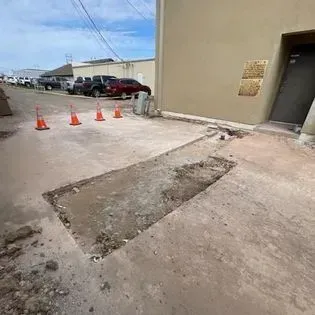
Alligator cracking — the interconnected, chicken-wire pattern — tells a different story. That pattern means the base itself has failed, often from repeated load stress on a compromised subgrade. Amarillo's caliche and clay soils shrink and swell with moisture changes, which makes base movement a real factor here beyond just freeze-thaw. Those areas need parking lot asphalt repair — removing and replacing the damaged section down to stable material — before any surface treatment goes on top.
Following the Correct Service Sequence
The right order is structural repair first, then crack sealing, then sealcoating, then striping — skipping or reversing steps wastes material and shortens the result's lifespan.
Once structural patches are complete and cured, crack sealing locks out water at the surface level. After crack sealing, pavement sealcoating goes on as a uniform protective layer that shields the surface from UV rays, fuel and oil spills, and further oxidation. Sealcoat is not a structural fix — it is a preservation layer that makes the repaired surface last significantly longer.
Striping always comes last. Sealcoat obliterates existing line markings entirely, so applying new stripes before the sealcoat is applied means repainting everything anyway. Waiting the full 24–48 hours for sealcoat to cure before striping ensures paint bonds properly and lasts through Amarillo's high-wind, high-UV conditions.
Does Your Lot Meet ADA Striping Requirements?
Faded or missing parking markings are not just an aesthetic issue — they can constitute an ADA compliance deficiency for commercial properties, creating measurable liability exposure.
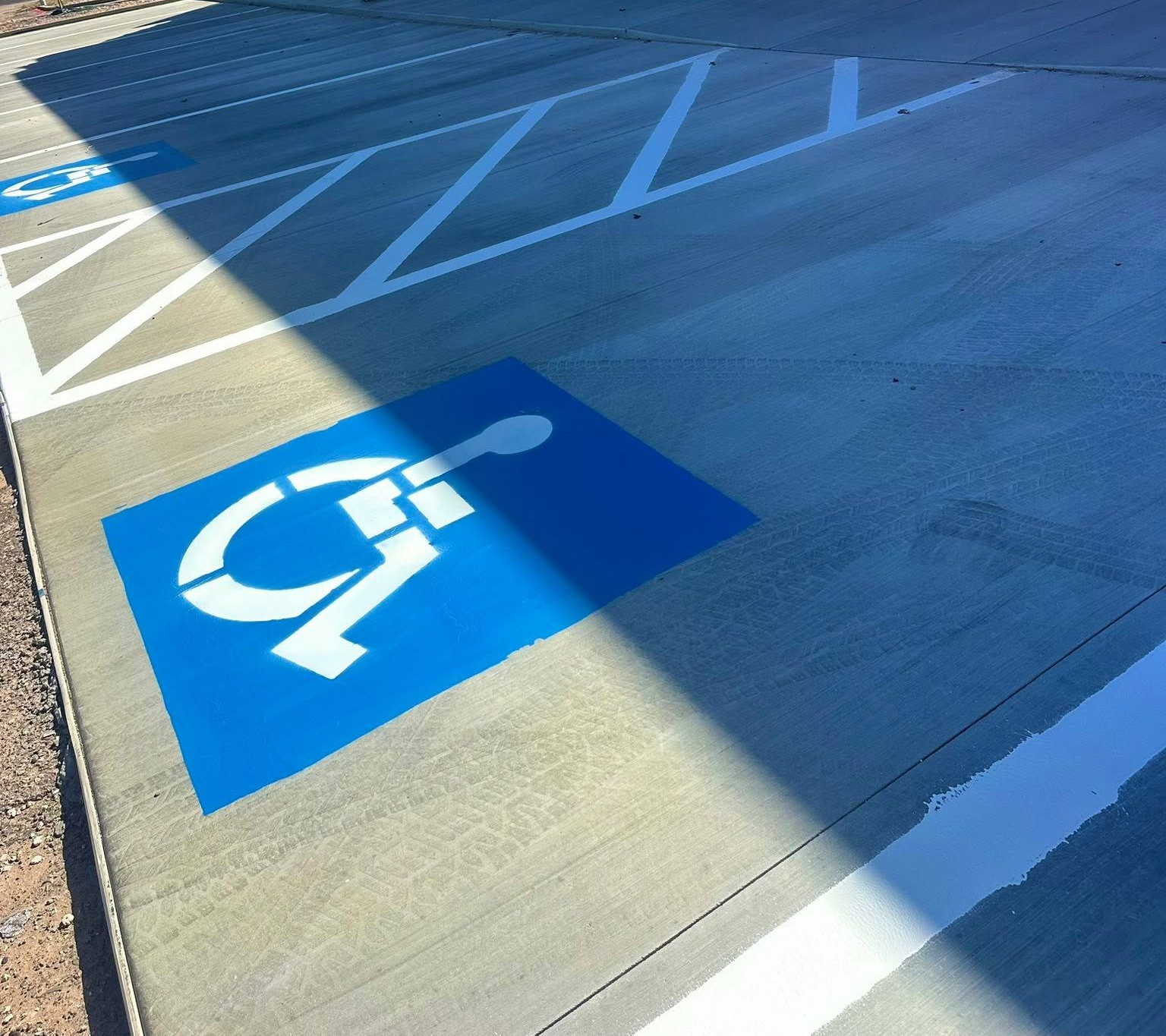
Title III commercial requirements cover accessible stall dimensions, van-accessible designations, compliant signage, and visible pavement markings. When sealcoating refreshes the surface, that is the right moment to bring parking lot striping and markings into full compliance — fire lanes, directional arrows, handicap symbols, and properly spaced stalls all reset to a clean, documented baseline.
Fall retail and holiday foot traffic amplifies the timing. A lot with raised crack edges, faded access aisles, or unclear fire lanes sees its highest pedestrian load exactly when repair windows are closing. Completing striping before that traffic peak reduces trip-hazard and slip-and-fall exposure during your busiest season.
Parking block installation can be coordinated in this final phase as well, protecting building facades, curbs, and landscaping while improving traffic flow — especially useful when a lot is being fully refreshed or reconfigured.
Addressing Amarillo's pavement deterioration in the correct sequence — structural repair, crack seal, sealcoat, stripe — protects your base investment and extends the time before a costly full overlay is necessary. The Texas Panhandle's climate makes that sequencing more time-sensitive than in milder markets, and acting before mid-October keeps all repair options open.
Schedule your lot evaluation before the sealcoating window closes with Pro Property Maintenance to get a clear scope of what your specific surfaces actually need this season.